
Introduction
Imagine sipping a velvety glass of chilled coffee on a warm afternoon—bold flavour, low bitterness, all enjoyed at home. That’s exactly what happens when you make cold brew coffee at home. In this post, you’ll learn how to make cold brew coffee at home — easy & delicious steps for café-style iced coffee, from bean choice and equipment to steeping methods and flavour hacks. You’ll get complete control over your iced coffee game, save money, and impress friends with your barista-level skills.
1. Crafting the Perfect Cold Brew Base
1.1. Choosing the Right Coffee Beans & Roast
When you make cold brew coffee at home, your bean choice matters. Opt for a medium to dark roast since cold brewing brings out smoother, less acidic profiles compared to hot-brew methods. Entities like Starbucks or Stumptown Coffee Roasters may offer roast blends, but you might find local roasters with beans optimized for cold extraction.
Using a lighter roast risks more acidity and brightness, which can fade into weakness when diluted for iced coffee. A dark/medium roast helps the iced coffee stay bold after dilution.
Pro tip: grind fresh just before brewing. According to the American Homebrewers Association, coarse-ground beans and a long cold steep reduce extraction of bitter compounds. American Homebrewers Association+1
Also consider the origin of the beans—washed vs natural process—and how that affects flavour. It’s your secret barista move.
1.2. Ground Size, Water Type & Ratio
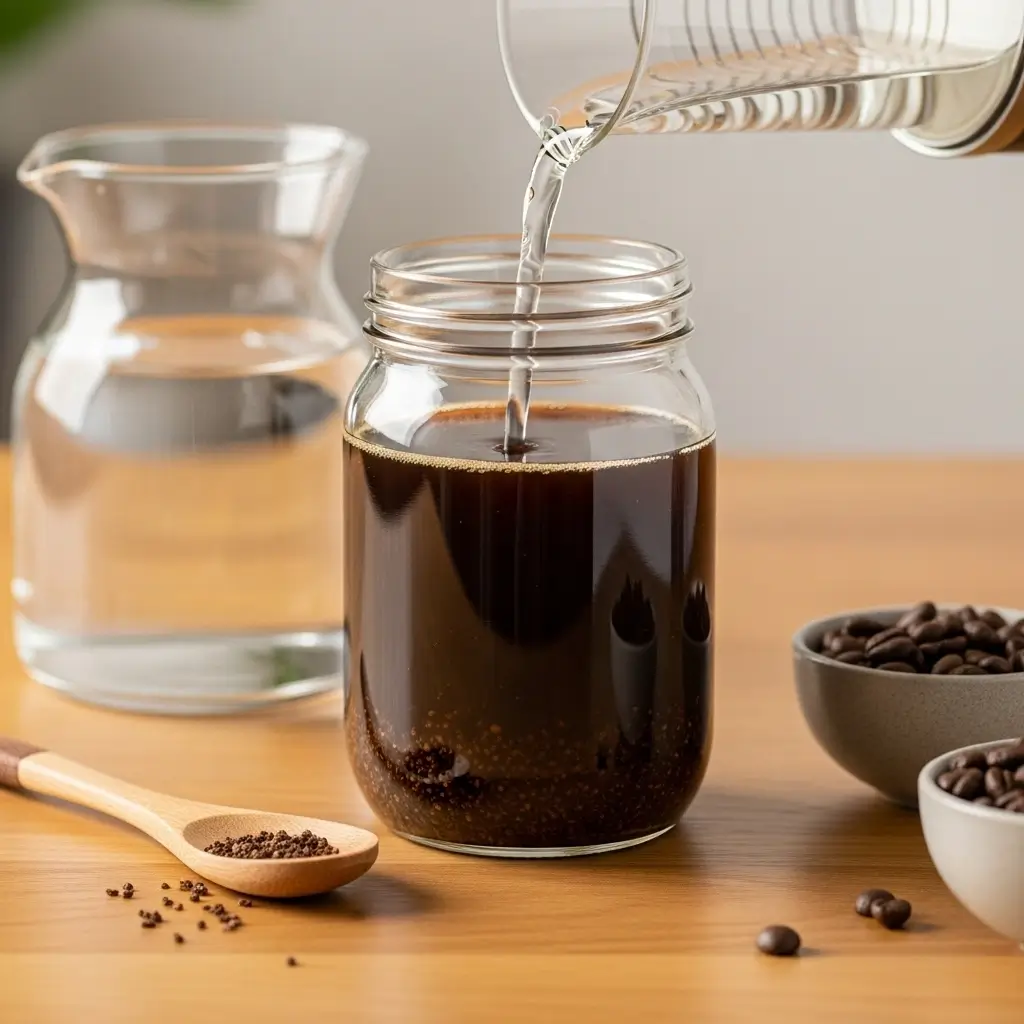
Once you’ve selected beans, it’s time to dial in the technical details. Cold brew requires a coarser grind (similar to French press) because the grounds steep in cool water for 12-24 hours. Over-fine grinding can lead to over-extraction and grit in your iced coffee. Fork in the Kitchen+1
Next: water type. Filtered or mineral-balanced water is best to let the coffee flavour shine.
Now the ratio: Many sources suggest ~1 part coffee to 4 parts water (by volume) for a concentrate base. WBD+1
But if you prefer a stronger concentrate (for iced lattes, iced cappuccinos), you might go heavier.
Here’s a quick ratio guide:
- Standard batch: 1 cup coarsely-ground beans : 4 cups filtered water
- Stronger concentrate: 1 cup beans : 3 cups water
Sticking to a consistent ratio ensures your iced coffee stays balanced, not watered-down or overpowering.
1.3. Steeping Time & Temperature Insights
This is where the “slow extraction” magic happens. For true cold brew, you don’t use hot water and ice immediately. You steep at room temperature or in the fridge for 12-24 hours, depending on your desired strength and flavour. American Homebrewers Association+1
Longer steep times (18-24 h) extract more flavour, body, and caffeine, but risk slightly more bitterness if over-extracted. My opinion: aim for 16-18 hours as a sweet spot for iced coffee.
Temperature influences extraction too. Room temp vs fridge both work—just keep the environment consistent. After steeping, you’ll strain and refrigerate. The result: a smooth, mellow base ideal for iced coffee without the hot-brew bitterness.
1.4. Filtering, Storage & Shelf Life
After steeping, you must filter out the grounds and store your cold brew concentrate properly. A two-step filter (fine mesh sieve lined with cheesecloth or nut-milk bag) is recommended to remove fine sediment. The Washington Post+1
Transfer your concentrate to an airtight jar or bottle and refrigerate. It will stay flavourful for up to about a week; beyond that, taste can degrade. Specialty Coffee Blog – Pull & Pour
Pro storage tip: Label your batch with date and strength. When you’re ready for iced coffee, you simply dilute, add ice, and personalise with milk, sweetener or flavouring.

2. Two Delicious Iced Coffee Recipes Using Cold Brew
2.1. Classic Cold Brew Iced Coffee Recipe
Ingredients:
- 1 cup coarsely ground coffee beans
- 4 cups filtered water
- Ice cubes
- Optional: milk (dairy or plant-based), simple syrup or flavour syrup
Instructions:
- Combine ground coffee + water in a large mason jar or pitcher. Stir gently to saturate all grounds.
- Cover and steep at room temperature or fridge for 16-18 hours.
- Strain the coffee through a fine mesh sieve lined with cheesecloth. Discard grounds.
- Transfer the concentrate to a bottle and refrigerate until chilled.
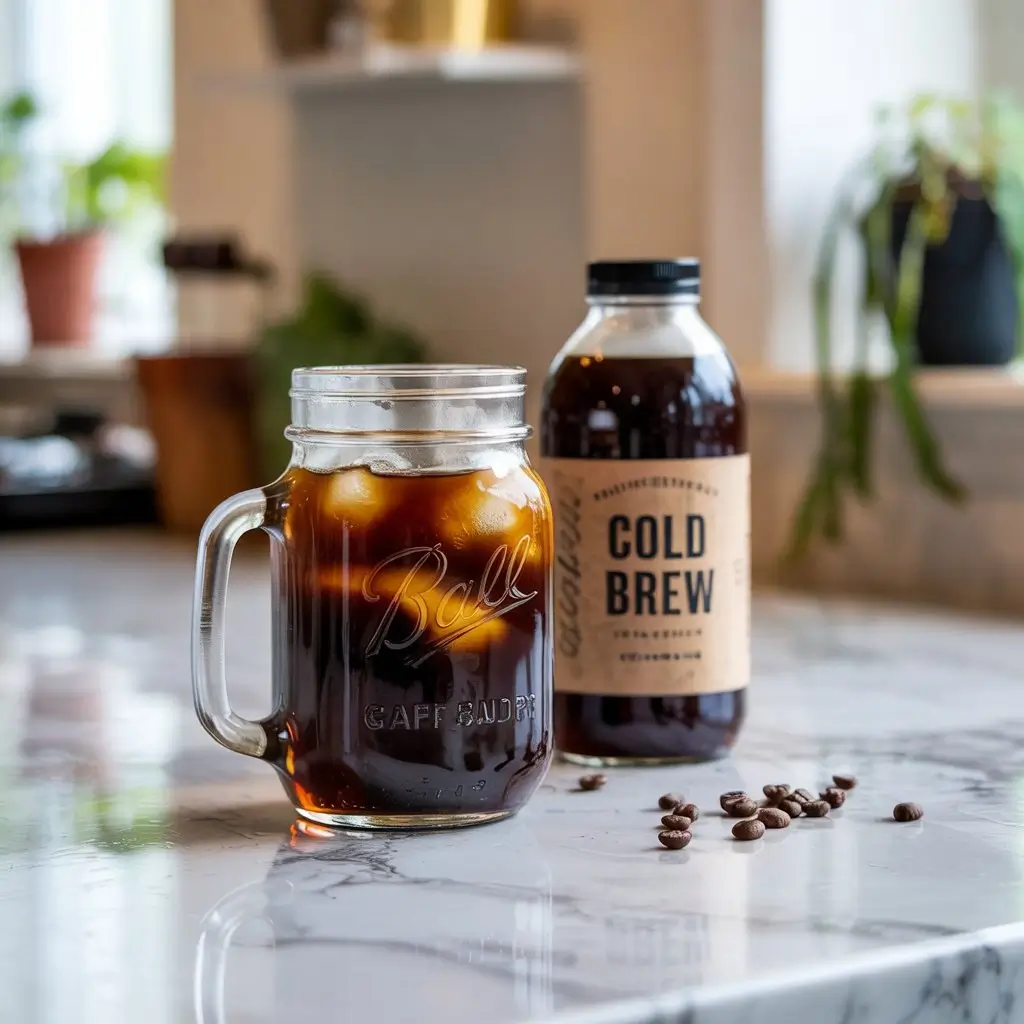
- To serve: fill a glass with ice cubes about 2/3 full. Pour cold brew concentrate over the ice at a 1 : 1 dilution (or stronger if you prefer). Add milk or syrup to taste.
- Stir and enjoy your smooth, low-acid iced coffee.
This recipe gives you a foundational iced coffee you can customise—add vanilla, caramel or cinnamon for flair.
2.2. Cookie Butter Cold Brew Latte (Iced Coffee Variation)
Since your brand is all about iced coffee recipes, here’s a twist: a Cookie Butter Cold Brew Latte.
Ingredients:
- 1 cup coarsely ground coffee beans
- 3 cups filtered water (for stronger concentrate)
- 1 Tbsp cookie butter (or speculoos spread)
- 1/2 cup milk (or plant milk)
- Ice cubes
Instructions:
- Brew cold brew concentrate: combine beans + water in a jar, steep 16-20 h, strain.
- Chill concentrate. In a separate small bowl, whisk cookie butter with a splash of warm milk until smooth.
- Fill a tall glass with ice cubes. Pour in the cold brew concentrate (approx. 3/4 glass).
- Add the milk-cookie butter mixture. Stir gently.
- Taste and adjust sweetness or add more milk if desired.
- Serve with a straw and maybe a sprinkle of cinnamon or cookie crumbs on top for extra appeal.
This variation taps into flavour variety and seasonal appeal—perfect for your iced coffee-recipes brand and shareable on Pinterest.

3. Troubleshooting Common Cold Brew and Iced Coffee Issues
3.1. Why Does My Cold Brew Taste Weak or Watery?
If your iced coffee tastes weak, chances are your ratio, steep time or dilution is off. Use a stronger concentrate (less water relative to coffee), or steep longer (within safe range 12-24 hours). Also check your dilation: if you use too much ice, you’ll get flavour dilution.
Tip: make concentrate, then test a small serving: 50 % concentrate + 50 % water/milk over ice. Adjust from there.
3.2. Why Is There Grit or Sediment in My Iced Coffee?
Grit usually comes from overly fine grind or insufficient filtering. Use coarse grounds, and filter with fine mesh + cloth. Sediment ruins taste and texture. According to AHA, proper straining is key. American Homebrewers Association
Also avoid pouring the last bit from the storage bottle if you see sediment settled at the bottom.
3.3. Why Does My Cold Brew Taste Bitter or Over-Extracted?
Cold brew should be smooth, mild, and less acidic than hot brew. Bitter taste suggests over-extraction: maybe grind too fine, steeped too long, or concentrated too strong. The Wikipedia on cold brew notes it’s “steeped in cold water for 12-24 hours” to avoid hot extraction of bitter compounds. Wikipédia
Solution: use coarser grind, shorten steeping time (12-16 h), or dilute more generously for your iced coffee.
3.4. How Long Can I Store My Cold Brew Concentrate?
When stored properly in the fridge in a sealed container, most cold brew concentrates taste best within about one week. Some sources push up to two weeks, but flavour decreases. Specialty Coffee Blog – Pull & Pour+1
For your brand, recommend “make Sunday, enjoy all week” batches—perfect for your community who want iced coffee convenience.

4. Flavour Hacks, Customisations & Brand-Worthy Iced Coffee Ideas
4.1. Milk Alternatives, Syrups & Flavour Add-ons
One big advantage of homemade cold brew: you’re in control. Try adding:
- Plant milks: oat, almond, cashew (popular in iced coffee niche)
- Flavoured syrups: vanilla bean, caramel, hazelnut, cookie butter (see previous recipe)
- Spices: cinnamon stick in the steeping jar, cardamom, nutmeg—these add subtle complexity. Some sources even add a cinnamon stick before brewing. Fork in the Kitchen
- Coffee ice cubes: freeze leftover cold brew into ice cubes so your iced coffee doesn’t get diluted as ice melts.
4.2. Concentrate vs Ready-to-Drink: What’s Best?
Making your own concentrate gives you flexibility. You can:
- Serve over ice for iced coffee
- Use dilute & milk for iced latte or iced cappuccino
- Mix with sparkling water for a coffee spritzer
Commercial brands such as Stumptown offer ready-to-drink cold brew bottles—but your homemade version gives brand-authenticity for your website and Pinterest audience (true artisanal iced coffee). The ability to customise flavours builds subscriber engagement and brand authority for The Iced Coffee.
4.3. Seasonal & Trending Iced Coffee Variations
Tap into current flavour trends to boost engagement:
- Nitro cold brew (nitrogen infused) — noted in articles as smoother and creamy. Wikipédia+1
- Sweet dessert-style iced coffee: cookie butter, salted caramel, maple
- Health-friendly: cold brew + oat milk + sugar-free vanilla syrup
- Travel-friendly: batch make in a mason jar, pour into reusable bottle—great for on-the-go iced coffee lovers.
Encourage your audience to experiment, share their versions, and tag your brand. That builds social proof and traffic.
4.4. Integrating Your Brand “The Iced Coffee”
For your site The Iced Coffee, you can position these recipes as your signature style. Use consistent imagery (realistic, high-quality iced coffee shots), call attention to your brand promise (“smooth, refreshing iced coffee recipes that anyone can make at home”). Align every recipe with your Pinterest and Facebook strategy—this post doubles as cornerstone content.
Include a section in your site sidebar or footer linking to other iced coffee posts (e.g., how to make iced lattes, cold brew with flavour syrups). Internal linking boosts SEO (and time on site).
5. Why Cold Brew At Home Wins: Benefits & Comparison
5.1. Cost Savings, Convenience & Batch Prep
Making cold brew coffee at home means you skip café mark-ups and convenience store premium pricing. Big batches = a week’s worth ready to go. According to Food Network, this method is “easy, economical and healthy.” WBD
For your iced coffee audience, emphasise:
- Make once, pour into multiple glasses throughout the week
- Avoid long café queues
- Customise your drink exactly as you like it (sweetness, milk, flavour)
5.2. Lower Acidity & Smoother Taste (especially for Iced Coffee)
A key advantage of cold brew method: less bitterness and acidity. Because you don’t extract the high-temperature compounds, the flavour is smoother. American Homebrewers Association+1
For iced coffee drinkers who dislike the “bite” of hot-brewed coffee poured over ice, cold brew is a game-changer. It lets the natural flavour of the beans shine in your iced coffee.
5.3. Flexibility & Scalability for Your Iced Coffee Routine
Whether you’re making one glass for yourself or a pitcher for guests, cold brew scales easily.
- Small batch: Use a quart jar, steep overnight.
- Large batch: Use a dedicated cold brew maker or large pitcher. Some specialty systems exist (mentioned in industry articles). TIME+1
Because you store concentrate, you’re ready for iced coffee at any moment—ideal for sharing and building your brand’s content library.
5.4. Comparison: Cold Brew vs Iced Coffee (Hot Brew + Ice)
It’s important your audience recognises the difference. Though both served over ice, they are different processes:
- Iced coffee (hot brew then poured over ice): quicker, but can be diluted and bit more acidic. Fork in the Kitchen+1
- Cold brew: Steeped in cold/room-temp water for 12–24 h, smoother, less acidic, concentrated base. American Homebrewers Association+1
As your blog “The Iced Coffee” emphasises iced coffee recipes, explaining this distinction builds your authority and trust.
Conclusion
You now have everything you need to make cold brew coffee at home — easy & delicious, and ideal for iced coffee lovers. From selecting the right beans and ratio, to steeping time, filtering, and flavour-hacking, you’re equipped to brew a smooth, bold iced coffee that rivals your favourite café.
Whether you stick with the Classic Cold Brew Iced Coffee or go adventurous with the Cookie Butter Cold Brew Latte, you’ve added two strong recipes to your iced coffee repertoire. Batch-prep, customise, and share—this is how “The Iced Coffee” becomes the go-to iced coffee brand.
Ready to take the next step? Explore our other iced coffee creations and step up your recipe game [inner link to related post].
👉 Discover Sonic Iced Coffee Recipes For Those Who Love Sweetness



2 thoughts on “How To Make Cold Brew Coffee At Home — Easy & Delicious”