Introduction
The ritual of whisking matcha is as calming as the drink itself. But you don’t need a $6 café run to experience the creamy, smooth, earthy perfection of a well-made matcha latte. With the right powder, precise water temperature, and silky milk microfoam, you can craft a cup that’s richer in flavor, brighter in color, and smoother than anything you’ve bought before.
In this guide, you’ll learn exactly how to make a matcha latte that tastes better than café drinks — from choosing ceremonial-grade matcha to mastering foam texture and milk-to-tea ratios. You’ll also get two expert-tested recipes: the Classic Hot Matcha Latte and the Iced Vanilla Matcha Latte, plus a fusion crossover for our iced-coffee readers — the Matcha Marble Cold Brew.
Let’s turn your kitchen into a mini tea lab.
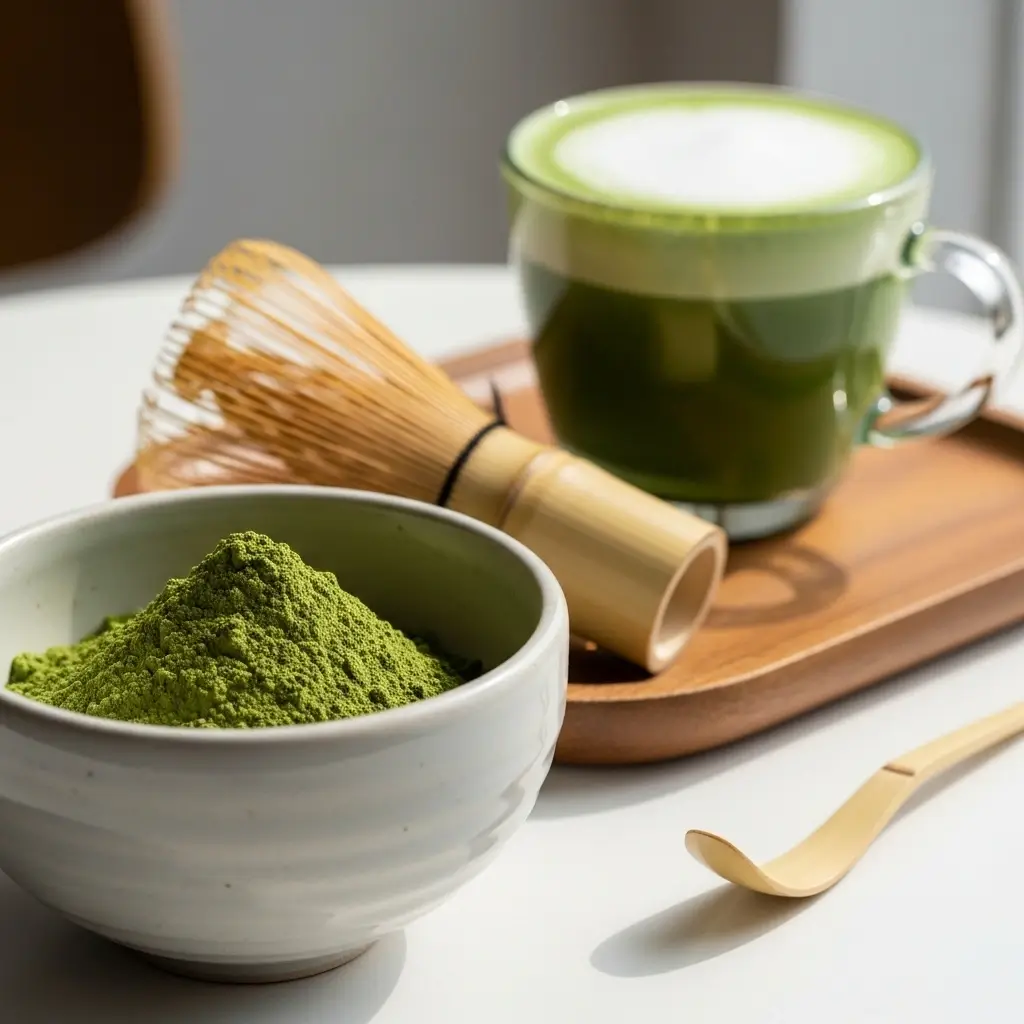
1. Understanding Matcha: The Foundation of Flavor
1.1 What Matcha Really Is
Matcha is finely ground shade-grown green tea leaves (tencha) from Japan. Because you consume the entire leaf, it delivers a unique synergy of L-theanine + caffeine, providing steady energy without the crash. Matcha’s antioxidants, especially EGCG (epigallocatechin gallate), help fight stress and inflammation.
Learn the full tea-to-powder process at Matcha.com.
1.2 Ceremonial vs Culinary Grade
- Ceremonial Grade: Bright emerald color, smooth texture, mild sweetness, crafted for drinking.
- Latte Grade: Slightly stronger body, designed to shine through milk.
- Culinary Grade: Cheaper, more bitter; best for desserts or baking.
If you want café-level taste, ceremonial or latte grade is non-negotiable.
1.3 Why Homemade Beats Café Matcha
Cafés often use low-grade matcha pre-mixed with sugar or whisk it with boiling water, which burns the flavor. Many also use milk heated beyond 70 °C, flattening sweetness and texture. At home, you can control temperature, ratio, and milk foam, the trifecta for balance.
2. Ingredients & Tools for Barista-Level Matcha Lattes
2.1 Selecting the Best Matcha Powder
Look for these quality cues:
- Origin: Uji, Nishio, or Shizuoka (Japan) = premium terroir.
- Color: Intense jade green means freshness; yellow or olive = oxidized.
- Texture: Fine, talc-like; no grit.
- Aroma: Fresh grassy and sweet — never musty.
Store airtight in the fridge and finish within 60 days. For expert insights, check The Tea Crane.
2.2 Water Matters
Matcha is delicate. Use filtered water at 75 – 80 °C (167 – 176 °F) — never boiling. Water that’s too hot destroys amino acids responsible for sweetness. If you don’t have a thermometer, let boiled water cool 2 minutes. Soft water = smoother taste.
2.3 Milk Selection & Foaming Potential
- Whole Milk: Creamy, balanced sweetness.
- Barista Oat Milk: Plant-based, silky, slightly sweet — top vegan pick.
- Soy Milk: Protein-rich, dense foam but can curdle if overheated.
- Almond Milk: Nutty aroma, light foam.
- Coconut Milk: Lush and aromatic but can mask matcha notes.
For iced versions, cold-froth your milk (using a frother or French press) to keep it glossy and oxygen-fresh.
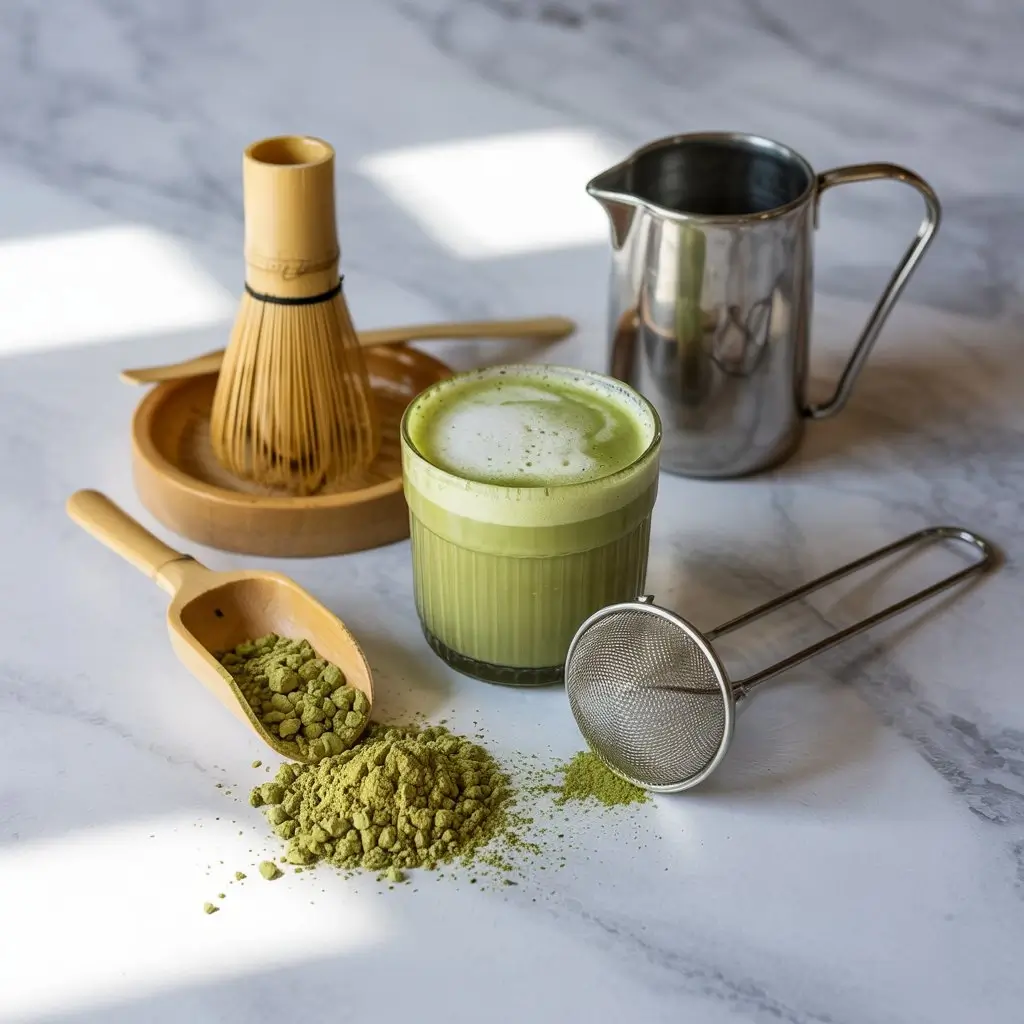
2.4 Essential Tools (Invest Once for Café Results)
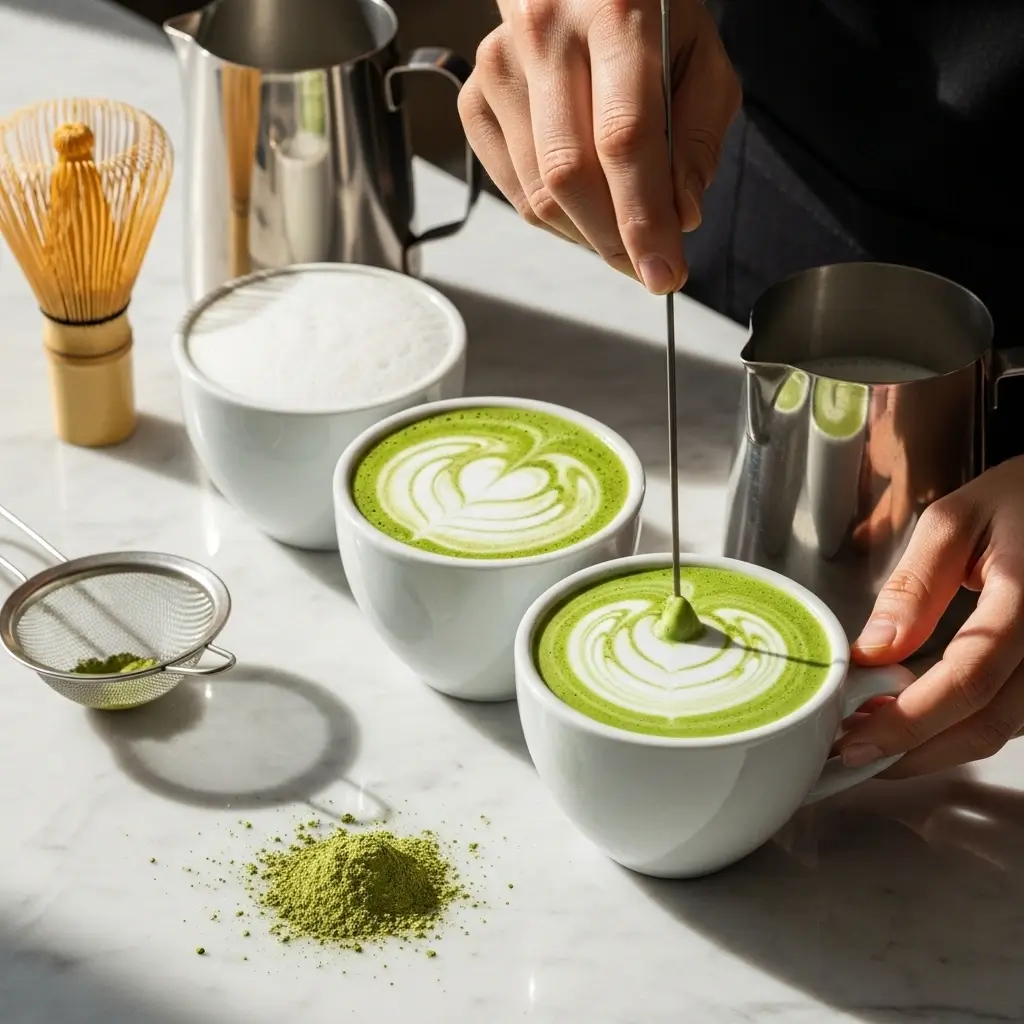
- Chasen (bamboo whisk) – creates fine microfoam.
- Chawan (tea bowl) – wide rim for easy whisking.
- Fine sieve – removes clumps before water hits powder.
- Milk frother or steam wand – for silky microfoam.
- Digital scale – ensures ratio precision.
3. Technique Mastery: Mix, Whisk & Foam Like a Pro
3.1 Matcha Base Ratio & Mixing Method
For one latte:
- 2 g (1 tsp) matcha powder
- 60 ml (¼ cup) hot water @ 75 – 80 °C
- 200 ml (¾ cup) milk
Steps:
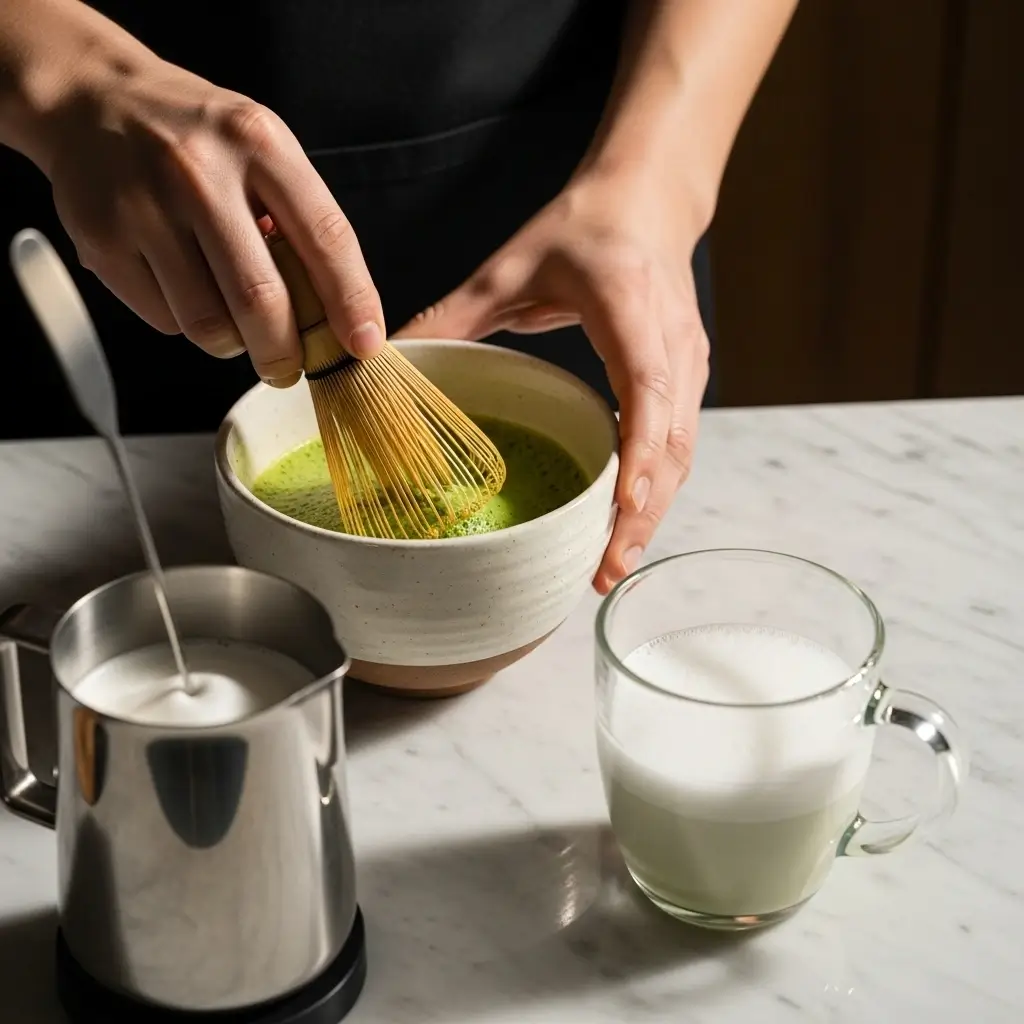
- Sift matcha into a bowl to remove clumps.
- Add hot water and whisk vigorously in a “W” motion until tiny bubbles form.
- Taste — if bitter, your water was too hot or your ratio is off.
That’s your matcha shot — the tea equivalent of espresso.
3.2 Milk Foam Technique (Hot & Cold)
- Hot Latte: Steam milk to 60 – 65 °C (140 – 150 °F). Froth until creamy, not airy. Stop before bubbling.
- Cold Latte: Use a frother or French press. Pump cold milk ~ 40 times for thick cold foam.
Foam stability depends on protein and temperature — cold milk traps air better initially; warming lightly integrates sweetness.
3.3 Pouring & Layering for Visual Impact
For iced lattes, start with sweetened milk at the bottom, then add ice and pour the matcha base slowly over a spoon so it floats.
For hot lattes, pour milk over the matcha base in a circular motion for even integration and a thin crema.
Bonus: sprinkle a dusting of matcha on top for that signature café look.
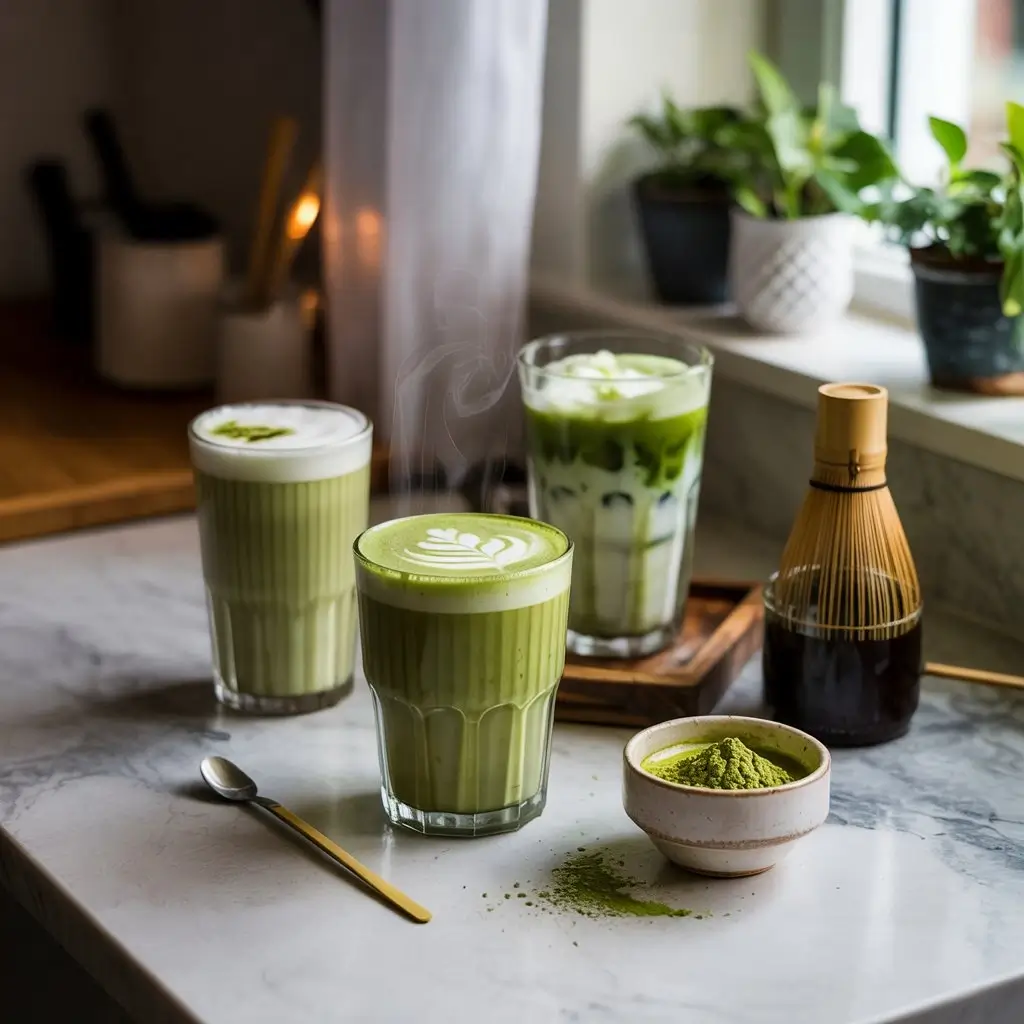
4. Recipes You Can Master at Home
4.1 Classic Hot Matcha Latte (Café-Perfect)
Ingredients
- 1 tsp ceremonial matcha (≈ 2 g)
- 60 ml hot water (~ 80 °C)
- 200 ml milk (whole or oat)
- 1 – 2 tsp honey or vanilla syrup
- Pinch sea salt (optional)
Steps
- Sift matcha into a bowl.
- Add hot water and whisk in W-motion until foamy.
- Steam milk to 60 °C and froth until velvety.
- Stir sweetener into milk, then pour into matcha base.
- Optional: add foam art or dust of vanilla powder.
Taste: Silky, slightly sweet, grassy-fresh.
Why it wins: Ceremonial matcha + controlled temperature = vivid color and mellow umami.
4.2 Iced Vanilla Matcha Latte (Refreshing & Viral)
Ingredients
- 1 tsp matcha powder
- 2 tbsp vanilla syrup (or 1 tbsp maple + ½ tsp vanilla extract)
- 60 ml hot water
- 200 ml cold milk (oat or whole)
- Ice cubes
Steps
- Whisk matcha + hot water until smooth.
- In a glass, add vanilla syrup and milk.
- Fill 3/4 with ice.
- Float matcha on top over a spoon.
- Optional: top with cold foam for extra crema.
Keep everything cold for layer definition and minimal oxidation.
4.3 Matcha Marble Cold Brew (Iced-Coffee Fusion)
Ingredients
- 4 oz cold brew + 4 oz water (over ice)
- 2 oz matcha base (from above)
- 2 tbsp vanilla cold foam or sweet cream
Steps
- Pour cold brew into glass of ice.
- Float matcha base over a spoon.
- Top with vanilla cold foam.
A two-tone masterpiece: smooth coffee meets grassy tea with velvet foam.
5. Troubleshooting & Expert Tips
5.1 Common Pitfalls
- Boiling water = bitter tea — cool 2 minutes after boil.
- Skipping sifting = clumps.
- Low grade = dull flavor.
- Over-frothing = air bubbles, flat texture.
5.2 Sweeteners & Pairings
- Honey + Vanilla: Elegant and balanced.
- Brown Sugar Syrup: Starbucks-style depth.
- Coconut Sugar: Light caramel note.
- Maple + Cinnamon: Perfect for fall.
- Mint + Oat Milk: Refreshing for summer.
5.3 Barista Secrets
- Pinch of salt enhances sweetness.
- Filtered water removes metallic taste.
- Clear glass = Instagram-worthy layers.
- Cold foam stays stable ~ 30 min if kept chilled.
5.4 Storage & Make-Ahead
- Matcha base (1 tsp + 60 ml water each) keeps 48 h sealed in fridge.
- Re-whisk before use.
- Never store mixed milk + matcha together — oxidation dims color.
5.5 Health Perks
Rich in catechins & L-theanine, matcha supports focus, relaxation, and steady energy.
Studies from the National Library of Medicine show that the L-theanine/caffeine combo enhances alertness without jitters.

6. Frequently Asked Questions (FAQs)
Q1: What kind of matcha do baristas use?
Most coffee shops use “latte grade” matcha — a ceremonial/culinary hybrid strong enough to cut through milk but still smooth. For best results at home, buy Japanese latte grade (Uji or Nishio).
Q2: Why is my matcha latte brownish or dull?
That means oxidation or poor-quality powder. Always store sealed in the fridge and avoid boiling water. A bright green hue signals freshness.
Q3: Can I make matcha without a bamboo whisk?
Yes. Use a milk frother or shake matcha + hot water in a sealed jar for 20 seconds. However, a chasen creates finer foam and prevents sediment.
Q4: How can I make it sugar-free but still tasty?
Use unsweetened oat milk for natural sweetness and stir in a drop of vanilla extract or a pinch of salt to amplify flavor without sugar.
Q5: What’s the best milk-to-matcha ratio?
For most palates, 1 tsp matcha : ¾ cup milk is balanced. For a stronger “tea-forward” flavor, go 1:½. Adjust sweetness accordingly.
Q6: Can I use cold water to mix matcha?
Yes — for iced matcha you can whisk matcha with cold water using a frother or shaker. Cold whisking preserves chlorophyll brightness and subtle sweetness.
Q7: What’s the difference between green tea latte and matcha latte?
A green tea latte uses steeped leaves; a matcha latte uses powdered leaves you consume. Matcha delivers stronger color, texture, and nutrients.
Q8: Does matcha expire?
Unopened tins last ~1 year. Once opened, finish within 60 days for peak taste. Old matcha smells grassy-flat instead of sweet-umami.
Q9: Can I add protein powder or collagen?
Yes! Mix it into the milk, not the matcha base, so it doesn’t clump or dull color. Vanilla or unflavored works best.
Q10: Is matcha safe during pregnancy?
Matcha has less caffeine than coffee (≈ 30 mg per tsp), but moderation is key. Consult your doctor if unsure. Choose pure, additive-free brands.
Conclusion
Making a matcha latte that tastes better than café drinks comes down to three things: quality matcha, temperature control, and milk texture. Once you master these, your drinks will rival any barista’s — and at a fraction of the cost.
From the creamy warmth of the Classic Hot Latte to the viral layers of the Iced Vanilla Matcha, and even the crossover Matcha Marble Cold Brew, you now hold every secret in your hands.
Whisk with intention, pour with patience, and savor the ritual. Because the best matcha latte isn’t served to you — it’s made by you.
👉 Discover “Starbucks Cold Foam Calories: How to Enjoy It Smartly”