Introduction
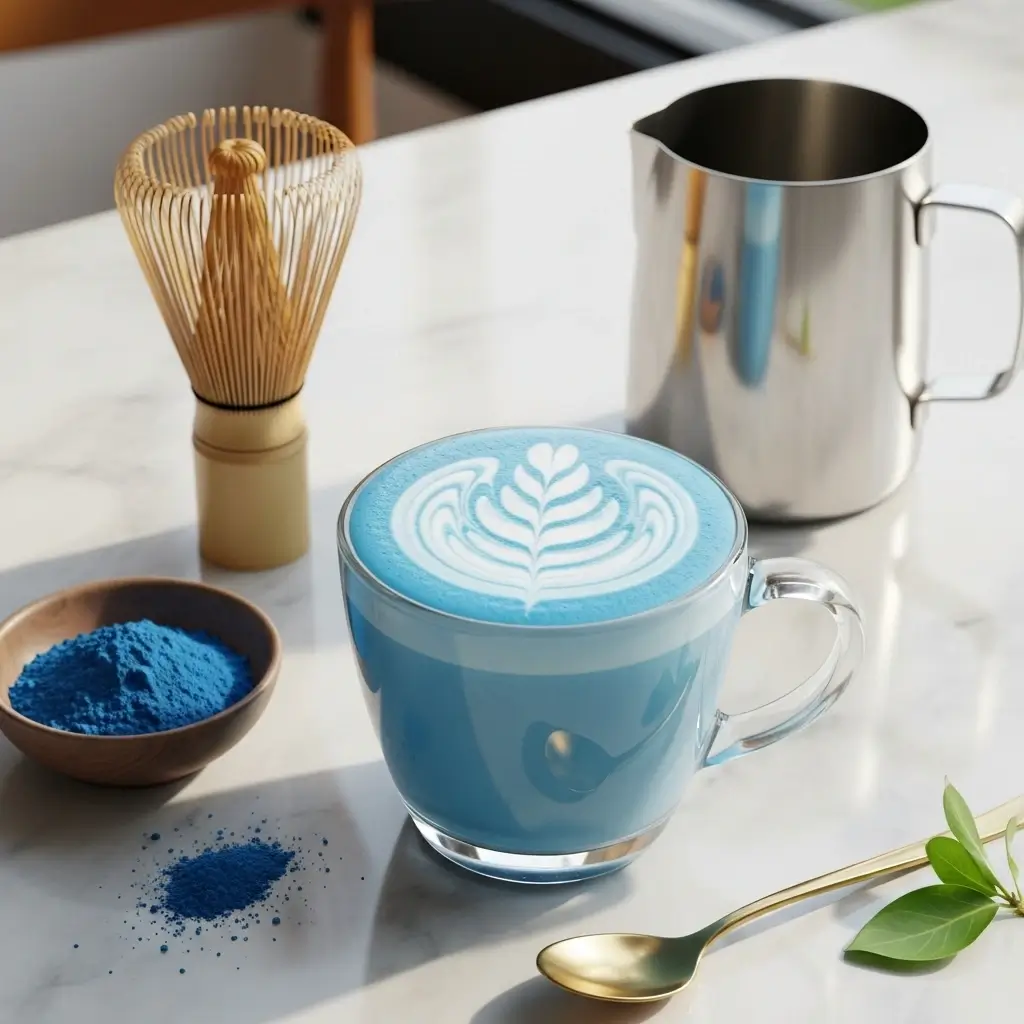
The first time you see a blue latte, you do a double-take. The color looks unreal—like a cloudless sky poured into a glass. The secret is butterfly pea flower (often nicknamed “blue matcha”), a caffeine-free botanical whose pigments turn drinks an electric cobalt—and flip to violet with a drop of lemon. In this guide, you’ll learn how to make a Blue Matcha Latte that’s silky, photogenic, and genuinely delicious. We’ll cover what blue matcha really is, how to choose the right powder and milk, the exact foaming and layering techniques for glossy café results, and two recipes—including our iced-coffee crossover: Blue Vanilla Cold Foam over Cold Brew. Pretty meets practical.
1. The Blue Latte, Decoded
1.1 What “blue matcha” really is (and isn’t)
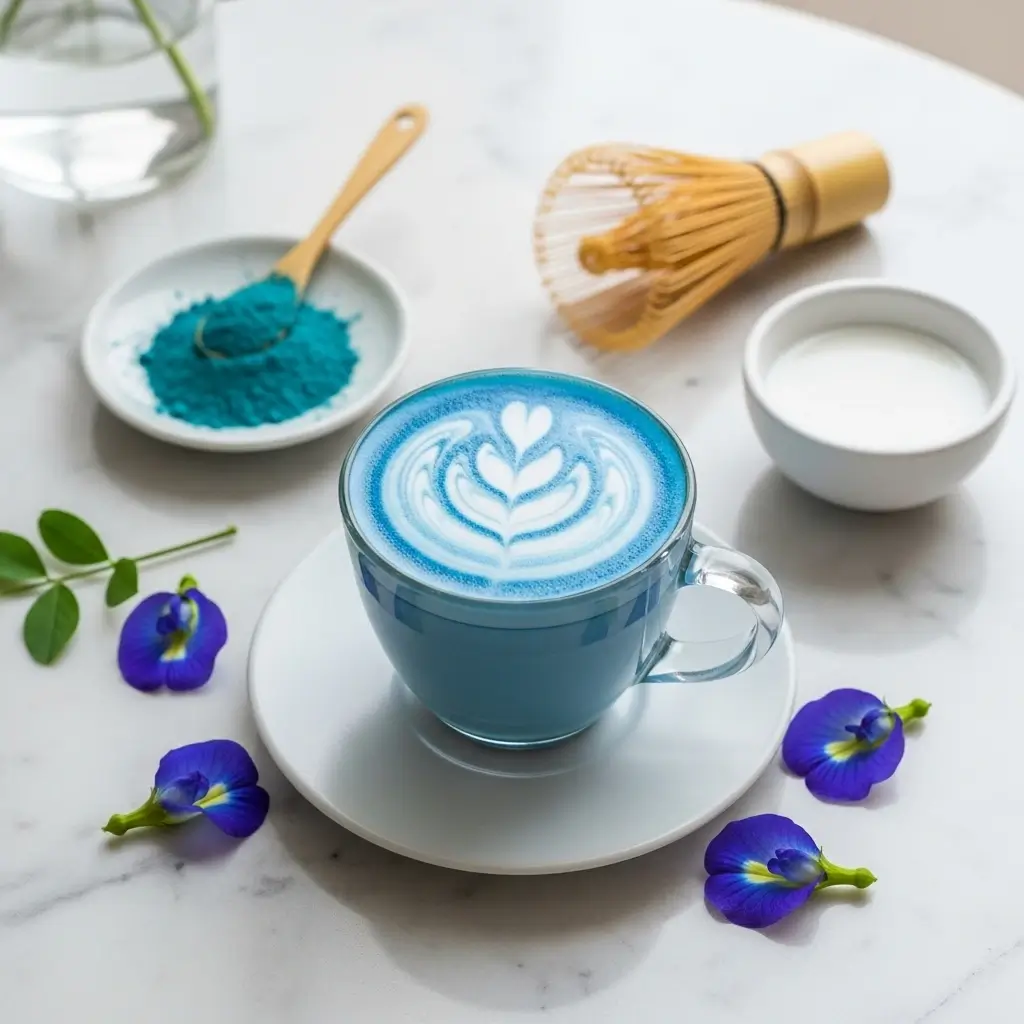
Despite the nickname, blue “matcha” is not green tea matcha. True matcha is powdered Camellia sinensis—grassy, tannic, caffeinated. Blue “matcha” is the finely milled petals of butterfly pea flower (Clitoria ternatea): caffeine-free, softly earthy, and used across Southeast Asia for teas and sweets. It’s loved for its vivid anthocyanin/ternatin pigments, not for a bold tea flavor. That neutrality is a feature: it lets your milk, syrup, and aroma choices take the lead. If you expect the bite of green matcha, you’ll be surprised; think gentle, comforting, and customizable. Quick science primer if you want to go deeper: anthocyanins shift color with pH (more below), which is why this latte is a playground for gradients and color-change effects. See a plain-English overview of butterfly pea flower uses here: Healthline.
1.2 Why it turns so blue (and sometimes purple)
Butterfly pea’s pigments are pH-sensitive. In neutral or slightly basic liquids (plain water, milk) they look cobalt blue; add acid (lemon, citrus syrups) and they swing toward purple or fuchsia. That’s why your latte can be engineered: keep the base neutral for saturated blue, or “park” a little citrus beneath the blue layer for a dramatic ombré. The color magic is chemistry, not dye. If you want the lab-grade explanation of these pigments and their stability, skim a relevant topic page on ScienceDirect or a research summary via the National Library of Medicine.
1.3 Who this drink is perfect for
Because it’s caffeine-free, a Blue Matcha Latte works for any hour and all ages. It’s soothing as a nighttime latte, whimsical for brunch, and camera-ready for social posts. Flavor is subtle, so it pairs beautifully with vanilla, coconut, maple, or honey. Coffee fans don’t have to sit it out: a blue vanilla cold foam laid over cold brew marries eye candy with a bold coffee base. If you love “pretty but real” café drinks, this is your home-barista flex.
2. Ingredients & Tools That Guarantee Café-Quality Results
2.1 Butterfly pea powder: what to buy (and what to avoid)
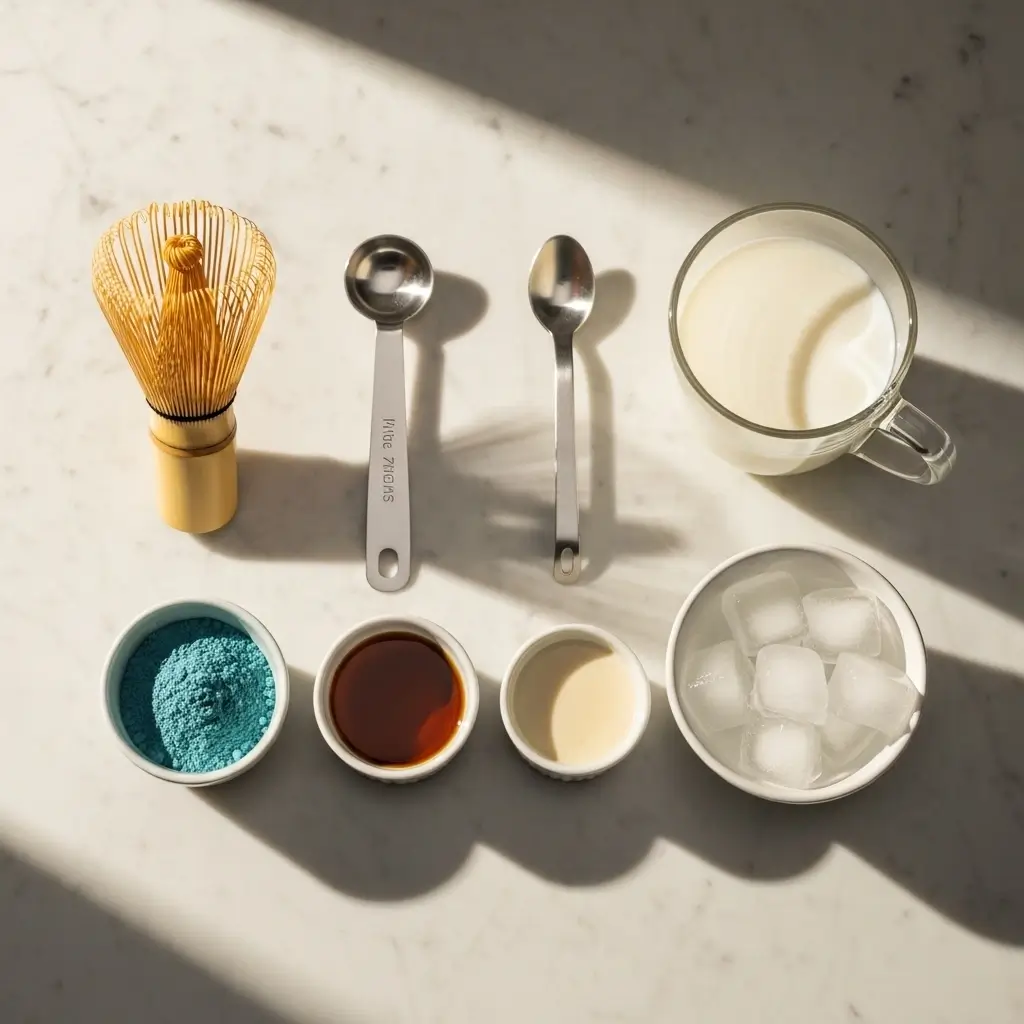
Quality powder looks intensely blue even when dry and feels very fine—almost talc-like. A grayish or dusty tone usually means old stock or poor drying. Labels should say 100% butterfly pea powder with no fillers. Buy smaller tins or pouches, store airtight and away from light, and refresh every few months; pigments fade with oxygen and sunlight. Not sure about a brand? Whisk ¼ tsp in 2 tbsp warm water: you should get a vivid, clean blue with minimal residue. If it tastes chalky or musty, switch.
2.2 Milk matters: dairy vs plant for color, foam, and flavor
Your milk determines body, foam, sweetness, and how the color refracts:
- Whole dairy milk: most forgiving; glossy microfoam; saturated, photogenic blue.
- Oat milk (barista-style): velvety and slightly sweet; gorgeous foam; a top pick.
- Coconut milk (carton, not canned): lush and aromatic, but can soften the blue unless your powder is potent.
- Almond milk: lighter body and foam; use barista formulations for stability.
For hot lattes, steam/heat to 55–60 °C (130–140 °F) to preserve sweetness and microbubbles. For iced, cold-froth milk with a handheld frother or French press to create pillowy cold foam.
2.3 Sweeteners, vanilla, and acidity control
Blue matcha is a gentle canvas. Vanilla syrup adds bakery warmth and makes the drink taste “finished.” Maple brings cozy depth; honey adds floral lift. Use a pinch of fine sea salt in your syrup—it heightens perceived sweetness without extra sugar. If you want the purple flip, add citrus—but sparingly. Acid dulls foam if overdone. For layered looks, keep acidic components below the blue to avoid immediate color shift.
2.4 Frothers, pitchers, and glassware that make it pro
A handheld frother is the easiest path to glossy cold foam. A French press surprises with rich, stable foam: add cold milk, pump 30–45 seconds, tap to settle big bubbles. If you’ve got a steam wand, use a small pitcher and aim for microfoam (tiny bubbles, paint-like sheen). For the “wow” moment, pour into a double-wall glass or tall highball so your layers are visible. Keep a long spoon for slow floating, and a fine mesh sieve to dust a pinch of powder on top without clumps. For extra milk-texturing nuance, this explainer from Perfect Daily Grind is solid: Milk steaming technique guide.
3. Technique Mastery: Color, Foam, and Layering
3.1 Ratios and mixing basics (so your blue pops)
Hot latte (10–12 oz):
- ½–¾ tsp butterfly pea powder (≈1–1.5 g)
- 1–2 tsp vanilla or simple syrup
- 8–10 oz milk
Iced latte (12–14 oz):
- ¾–1 tsp powder (≈1.5–2 g)
- 1–2 tbsp simple/vanilla syrup
- 8–10 oz cold milk + a large handful of ice
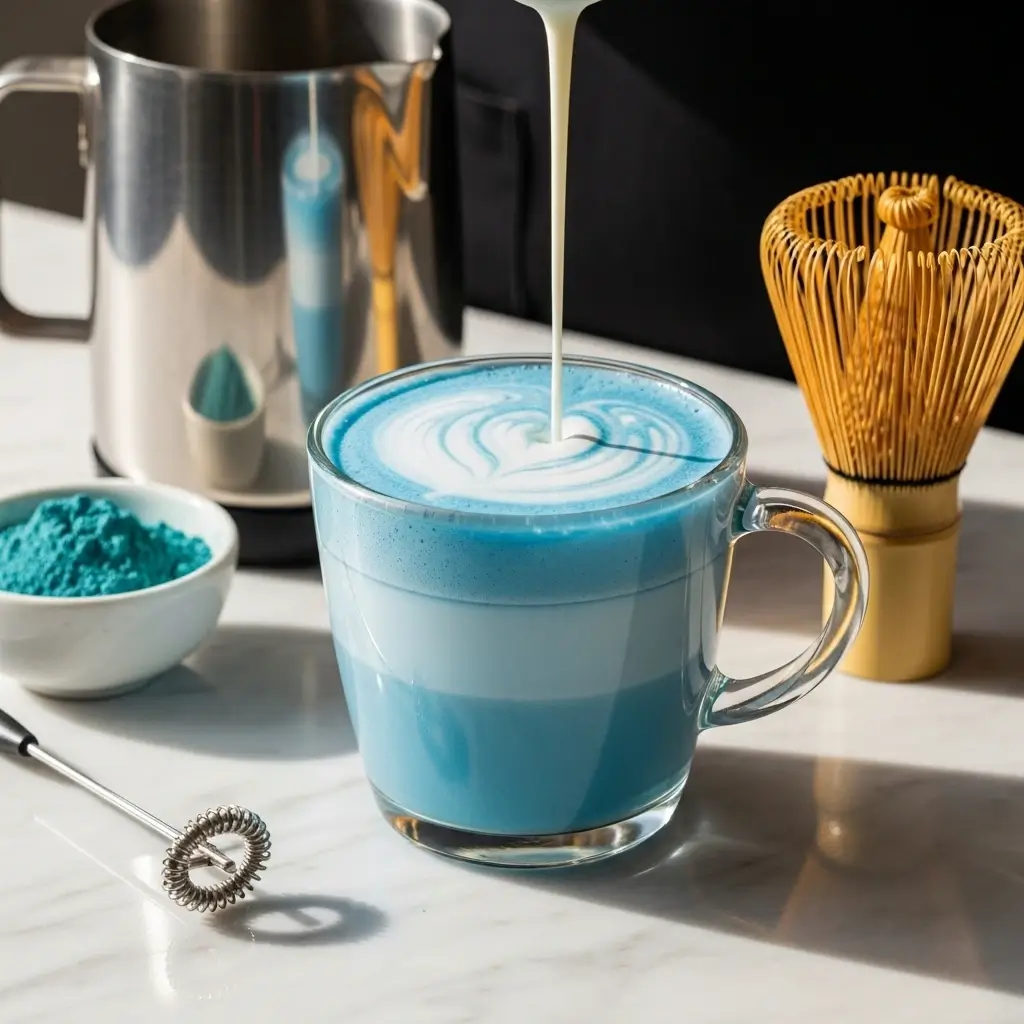
Always pre-whisk the powder with 1–2 tbsp warm water to a smooth concentrate before adding milk—this prevents specks and preserves foam (less aggressive stirring later). For crisp layers, build by density: sweetened milk first (heavier), ice in the middle, then slow-float the blue concentrate on top.
3.2 Microfoam three ways (steam wand, frother, French press)
- Steam wand (hot): Start with cold milk in a chilled pitcher. Tip just under the surface for 2–3 seconds to “stretch,” then sink slightly to roll the milk and build microfoam. Stop at 55–60 °C. Tap-swirl to polish.
- Handheld frother (cold or hot): Chill milk first; froth in a tall container to avoid splatter. Move the wand gently up and down for tiny bubbles. Pre-warm the milk if making a hot latte.
- French press (cold foam star): Fill to one-third; pump steadily until volume doubles; tap to knock out big bubbles. The result is pillowy, stable, and photo-ready.
Rule of thumb: gloss over volume. Big “soap” bubbles kill color vibrancy and collapse fast. Glossy foam makes the blue shine.
3.3 Layering and color-flip tricks (hello, ombré)
Layering is about patience and pour control. Keep everything well-chilled for iced versions—cold liquids layer more cleanly. For a blue-over-milk ombré: sweetened milk at the bottom, ice, then slow-pour the blue over the back of a spoon. And for a purple-to-blue effect, place a thin layer of lemon syrup at the bottom, add milk and ice, then float the blue; don’t stir. For hot lattes, build the blue base first, then pour microfoam gently to let streaks of blue peek through. Finish with vanilla bean dust, coconut flakes, or edible flowers for café drama without weighing down the foam.
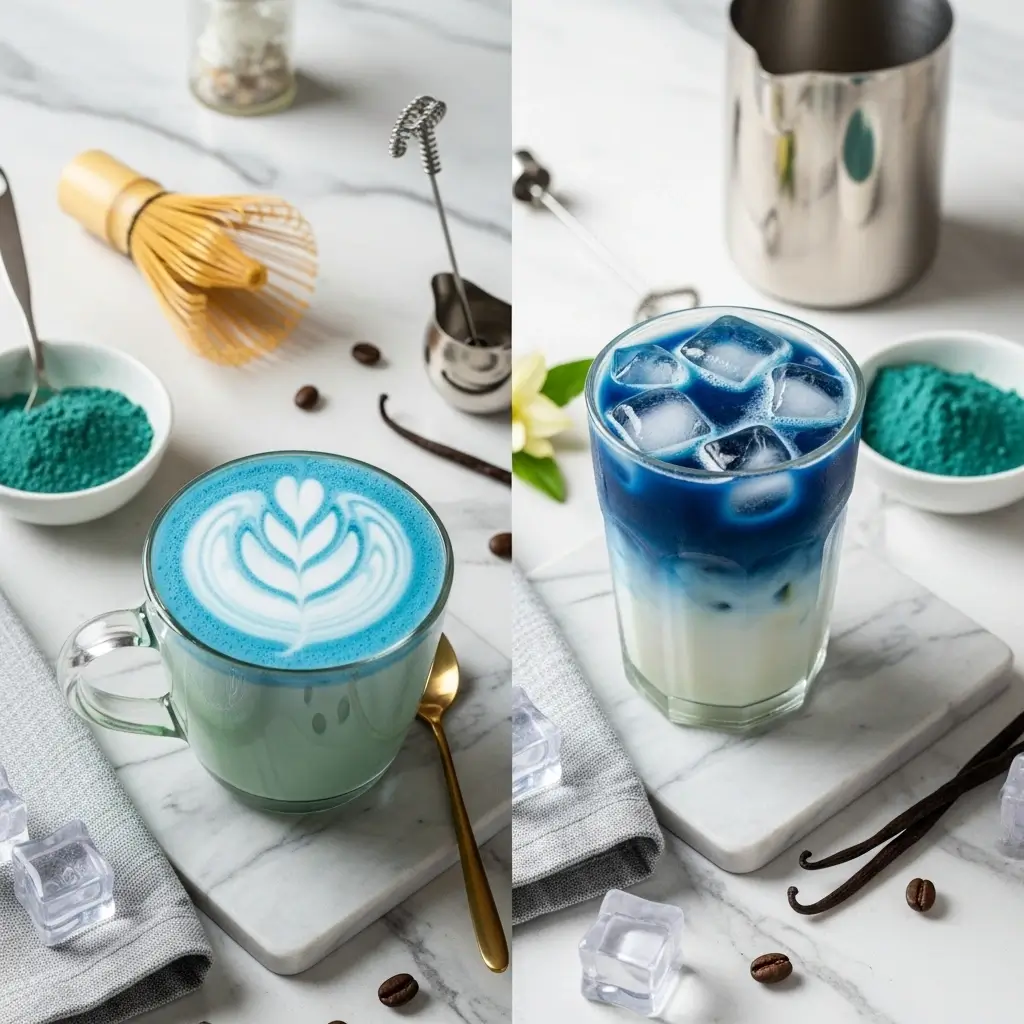
4. Recipes: From Classic to Iced-Coffee Crossover
4.1 Classic Hot Blue Latte (creamy, cozy, photogenic)
Ingredients
- ½–¾ tsp butterfly pea powder
- 1–2 tsp vanilla syrup (or maple)
- 8–10 oz whole or barista-oat milk
- Pinch fine sea salt (optional)
- Garnish: lemon zest, coconut flakes, or edible flowers
Steps
- In a mug, whisk powder with 1–2 tbsp warm water into a smooth concentrate.
- Steam or heat milk to 55–60 °C; stir in syrup and a tiny pinch of salt.
- Pour milk into the blue base, holding back foam with a spoon; spoon foam on top.
- Garnish lightly. For aroma without excess acid, express lemon zest over the surface.
Pro tip: If color looks pale, whisk an extra ¼ tsp powder with a spoon of warm water and swirl in.
4.2 Iced Blue Matcha Latte (crisp, layered, summer-ready)
Ingredients
- ¾–1 tsp butterfly pea powder
- 1–2 tbsp simple or vanilla syrup
- 8–10 oz cold milk (whole or barista-oat)
- Large ice cubes
- Optional: ½–1 tbsp lemon syrup at the bottom for a purple base
Steps
- Whisk powder with 2 tbsp warm water to a vivid blue; chill 1–2 minutes.
- In a tall glass, add syrup + cold milk and stir gently.
- Add ice.
- Slow-float the blue concentrate over a spoon so it sits on top.
- Optional: before step 2, add a thin layer of lemon syrup to create purple-to-blue ombré.
Serve immediately and avoid stirring to preserve layers.
4.3 Blue Vanilla Cold Foam over Cold Brew (our iced-coffee twist)
Ingredients
- Cold brew base: 4 oz cold brew concentrate + 4 oz cold water, over ice
- Blue vanilla cold foam:
- 4 oz cold milk (dairy or barista-oat)
- 1 tbsp vanilla syrup
- ¼–½ tsp butterfly pea powder, pre-whisked with 1 tsp warm water
- Pinch salt (optional)
Steps
- Build the cold brew in a tall glass (about 10–12 oz total with ice).
- Froth cold milk + vanilla syrup to a glossy foam (handheld frother or French press).
- Fold in the blue concentrate gently so the foam stays pillowy.
- Float the blue foam over the coffee with a spoon for a dramatic two-tone cap.
- Garnish with a whisper of vanilla bean or a micro-dust of powder.
Flavor note: The coffee remains bold and clean while the foam adds vanilla aroma, silk, and the iconic blue crown. “Too pretty to drink”—until you do.
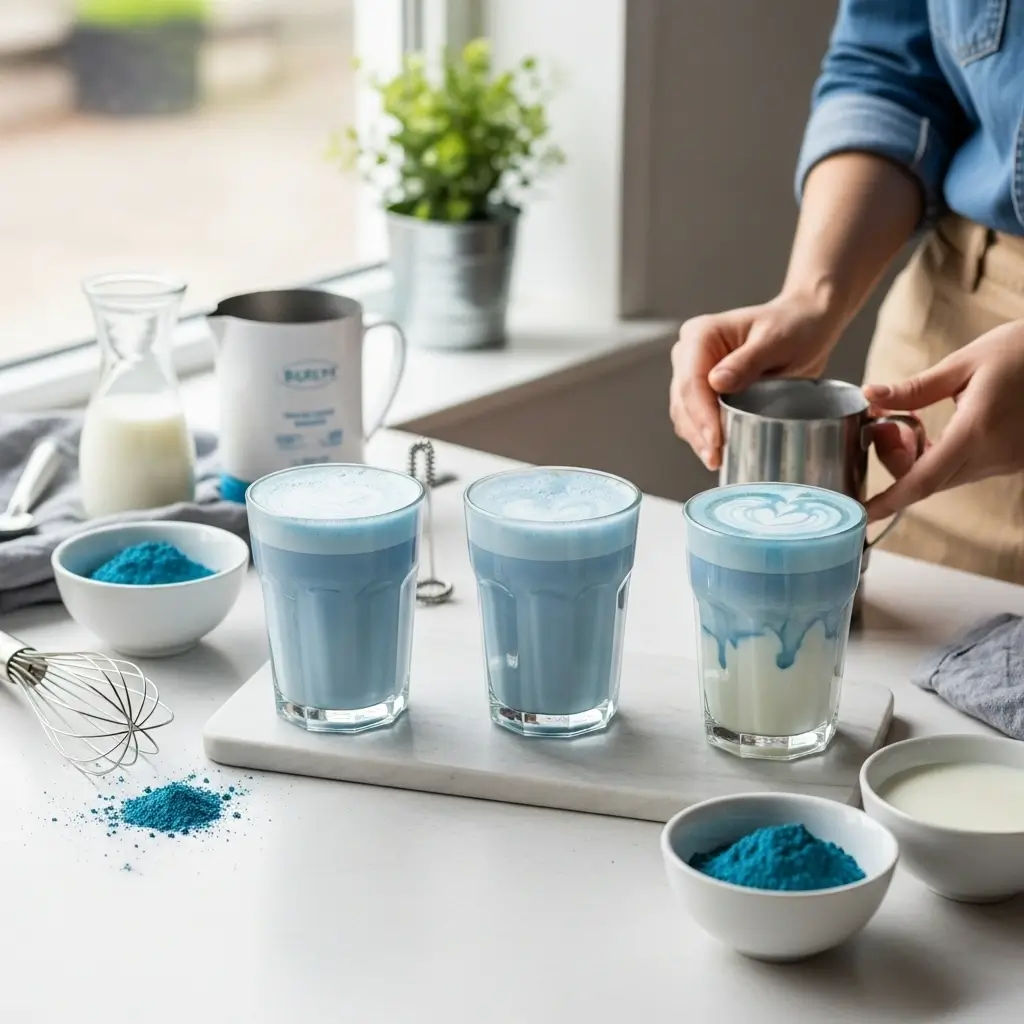
5. Troubleshooting, FAQs, and Creative Variations
5.1 Why is my blue pale, gray, or green—and how do I fix it?
- Pale: under-dosed or weak powder. Add ⅛–¼ tsp more and re-test.
- Gray: old powder, water too hot, or over-whipping (big bubbles scatter light poorly). Replace powder, whisk with just-warm water, and aim for microfoam.
- Greenish cast: often lighting plus weak powder. Check color in daylight and strengthen the concentrate.
- Muddy layers: too much stirring or mismatched densities. Chill liquids, sweeten your bottom layer (heavier), and pour the blue slowly over a spoon.
5.2 Is it safe, what about the lemon color change, and how do I store it?
Butterfly pea flower is edible and used widely. The color-flip is a pH reaction, not artificial dye. Buy from reputable brands, and store the powder airtight, light-protected. Prepared blue concentrate keeps 24–48 hours in the fridge (re-whisk before use). Cold foam is best fresh. For an accessible overview of benefits/uses, see Healthline. For a deeper pigment stability angle, the National Library of Medicine offers research summaries.
5.3 Flavor boosters, seasonal spins, and serving ideas
- Vanilla bean: scrape half a pod into your syrup for bakery-shop aroma.
- Maple + cinnamon: fall comfort without heavy sweetness.
- Lavender honey: spring floral—use sparingly.
- Blue milk ice: freeze blue milk as cubes so iced lattes never dilute.
- Holiday sparkle: white chocolate drizzle and a pinch of edible glitter.
- Espresso cameo: for a coffee-forward moment, pour a single espresso under a thick blue foam so the coffee stays dark and the cap stays bright.
For milk-texturing fundamentals (and avoiding “bubble bath” foam), this guide is helpful: Perfect Daily Grind.
Conclusion
You don’t need a specialty café to craft a show-stopping Blue Matcha Latte—only quality butterfly pea powder, the right milk, and a few disciplined moves: whisk a smooth concentrate, chase glossy microfoam (not volume), and layer by density for clean ombré. Keep acid in check for saturated blue, and deploy lemon when you want that theatrical color flip. For the iced-coffee faithful, the Blue Vanilla Cold Foam over Cold Brew proves the hue belongs in your daily ritual—not just your feed. Beauty and flavor can coexist. In your kitchen, they will.
👉 Explore “Dare Iced Coffee: The Ultimate Guide to This Aussie Favorite”